
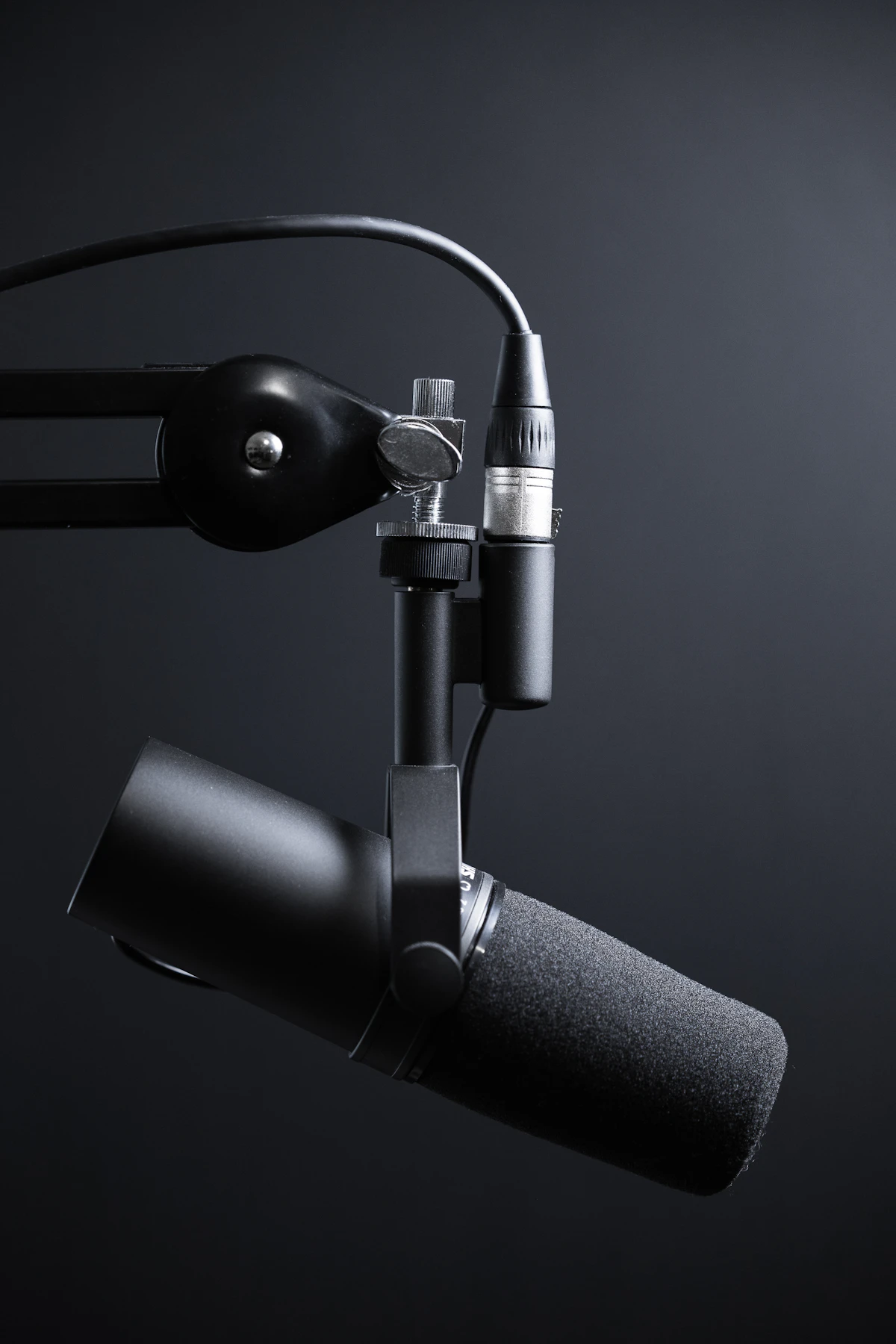
When setting up a home studio, podcast desk, or remote work office, the fundamental dilemma every creator faces is choosing between a dynamic and a condenser microphone. While both convert sound waves into electrical audio signals, their internal capsule physics dictate dramatically different performance characteristics.
The Core Acoustic Differences
Dynamic microphones (like the Shure SM7B or Rode PodMic) employ a moving coil attached to a mylar diaphragm situated inside a magnetic field. Because the diaphragm is relatively heavy, it requires more acoustic kinetic energy to oscillate. Consequently, dynamic mics naturally attenuate subtle room reverberation, HVAC hums, and computer fan whirs.
In contrast, condenser microphones (such as the Audio-Technica AT2020 or Rode NT1) use an ultra-thin, gold-sputtered mylar membrane positioned microscopic fractions of a millimeter away from a conductive backplate, acting as a variable electrostatic capacitor. This assembly is lightning fast and captures hyper-articulate transient details up to 20kHz.
Pro Tip: If your room does not have acoustic rockwool panels or thick carpeting, a dynamic microphone with tight cardioid rejection will yield far cleaner vocal isolation than a sensitive condenser.
Direct Comparison Table
| Feature | Dynamic Microphone | Condenser Microphone |
|---|---|---|
| Sensitivity | Low (-50 to -58 dBV) | High (-32 to -38 dBV) |
| Power Requirement | Passive (None) | +48V Phantom Power or USB 5V |
| Background Noise Rejection | Exceptional | Picks up ambient room sound |
| High-Frequency Detail | Smooth, rolled-off air | Crisp, extended, crystalline |
| Best Used For | Untreated rooms, loud vocals, streaming | Vocal booths, acoustic guitars, voiceover |
Summary Recommendation
If you record in an untreated living room, home office, or noisy environment, choose a dynamic mic. If you have acoustic treatment and desire pristine voiceover sparkle, invest in a studio condenser.
Reader Comments (1)
Leave a Comment ↓This guide made choosing between dynamic and condenser super easy. Thanks!
Join the Conversation
No registration required. All comments are moderated by administrators before appearing.